


This year, and into next, the great art deco cities of the world are celebrating. That Golden Age of architecture, curve, shape and colour that revolutionised design swept out of Paris following the Exposition internationale des arts décoratifs et industriels modernes exhibition 100 years ago. The new movement went east to Mumbai and Shanghai and west across the Atlantic, most famously to Miami but it landed in Cuba, too. In Havana, especially, sugar wealth was spent on this new craze. Here’s a glimpse into Havana’s art deco swagger.
The first completely art deco home was built in 1927 in the upmarket district of Miramar. Known as the Francisco Argüelles house it stands at the corner of 5th Avenue and 22nd Street. Its cylindrical corner shaping the main entrance is covered by a frieze sculpted by Cuban artist Juan José Sicre, responsible, too, for the José Martí sculpture in Havana’s Revolution Plaza.
But it’s Havana’s most iconic deco structure, a towering homage to one of the world’s best known rum brands, you won’t want to miss. In 1930s Havana, Bacardí rode the wave of visitors escaping Prohibition in the USA. As a monument to its success, it built its statement piece HQ in Havana.
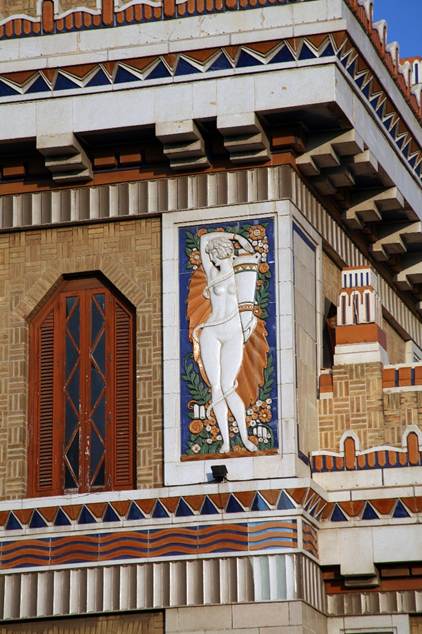
The Edificio Bacardí is Havana’s first skyscraper. It towers over the edge of Old Havana on Monserrate Street at the corner of San Juan de Dios Street. Built in 1930 by Esteban Rodríguez Castells and Rafael Fernández Ruenes, its 12 storeys are made from red granite and its enamelled terracotta panels of naked nymphs were designed by the American artist Maxfield Parrish. Its ziggurat tower is topped by a bronze bat, the recognisable motif of Bacardi rum. The interiors are gorgeous and when the building reopens in 2026, do swing by to admire the décor and visit the café.
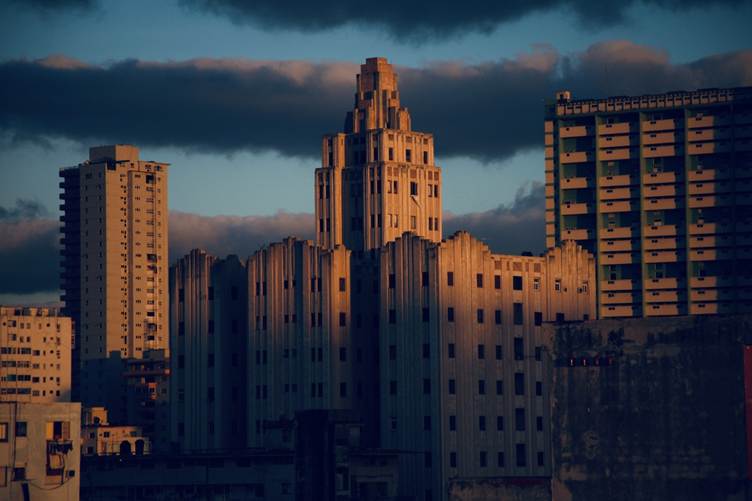
Another striking deco structure which dominates a different neighbourhood skyline is the López Serrano building in the artsy barrio of el Vedado. José López Serrano was a publisher who ran La Moderna Poesía publishing company. He commissioned architects Ricardo Mira and Miguel Rosich in 1932 to erect the dusty pink ziggurat-towered building of apartments. (A couple of habaneros offer B&B stays here at the 13th and L street address). Inside the lobby is a beautiful relief in nickel-plated steel, El Tiempo (Time) by Cuba’s foremost graphic artist, Enrique García Cabrera.
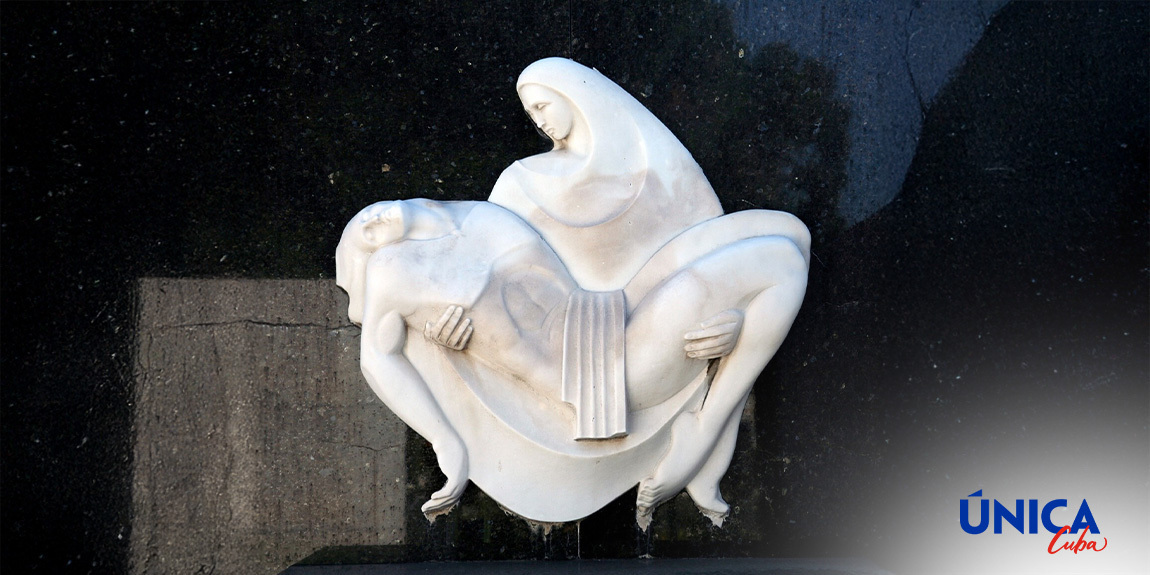
Other highlights in el Vedado include the outstanding Casa de la Amistad found on Paseo Avenue. It was a love letter in stone commissioned by sugar baron Juan Pedro Baró for married socialite Catalina Lasa. The star-struck couple had fallen in love in 1905 when Cuba had no divorce laws. They escaped to Paris to continue their affair. When they returned to Havana in 1917 (when divorce laws had changed) Baró built this neo-Italianate villa with its art deco dining room. He also named a rose in Catalina’s honour. When Catalina died, Baró commissioned French glassmaker René Lalique to design her tomb known for its beautiful black granite doors engraved with angels. The bulbous white marble dome of her mausoleum, in the Christopher Columbus Cemetery, is patterned with multiple square skylights featuring glass Catalina roses. While at the cemetery, don’t miss Cuban sculptor Rita Longa’s delicate white marble pietà adorning the 1957 tomb of the Aguilera family.
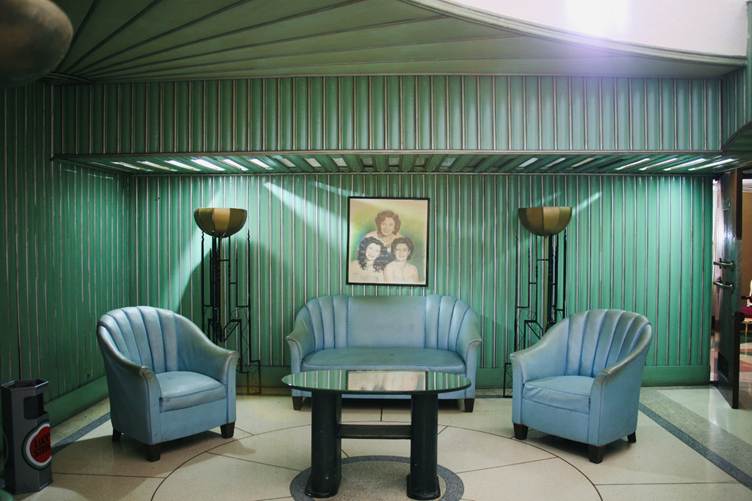
In the Centro district, book a show at the America Theatre on the main Galiano drag. A 1941 towering apartment block conceals the jewel within: a double curved staircase overlooking a terrazzo floor decorated with art deco zodiac signs. The theatre was modelled after New York’s Radio Music Hall. The stylised and colourful male and female cloakrooms are unforgettable.
Love Cuba is the UK’s leading Cuba holiday specialist. Click here for more information on Cuba holidays, Multi Centre Cuba Holidays or Tailor Made Cuba Holidays, please don’t hesitate to contact our friendly team of Cuba holiday specialists on 0207 071 3636 or email: enquiries@lovecuba.com today.