


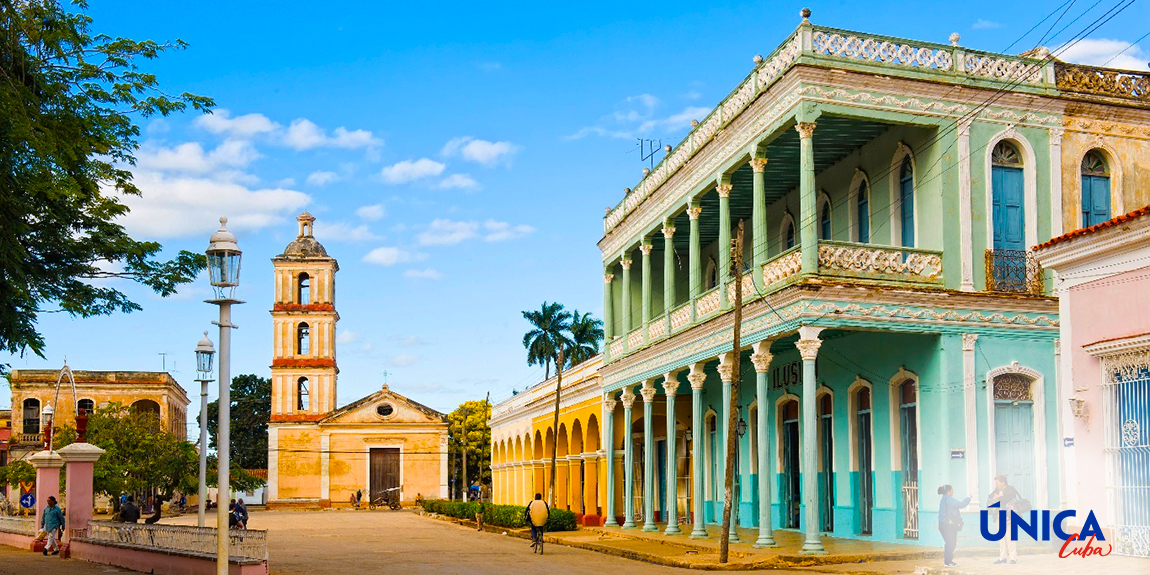
In Remedios, one-storey Spanish colonial homes in shades of cinnamon, baby blue and mustard, curve around the sun-baked streets. They are mostly higgledy- piggledy, built that way to deter pirates. All roads seem to converge, though, on the town’s main plaza on which stands the Church of St John the Baptist with a fabulous gold-leaf retablo inside.
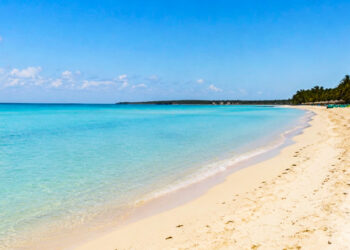
Remedios sits between the university town Santa Clara, aka ‘City of Che’ and Cayo Santa María, a string of dazzling beaches facing turquoise seas off the north coast of central Cuba. The town is famous across the island for its Christmas Eve celebrations.
Las Parrandas, as the festive events are called, is a centuries-old tradition which sees two neighbourhoods in the town, El Carmen and El Salvador, compete against each other with floats, music, brass bands, fireworks and two enormous bulb-lit towering structures. Think themes of Maya temples, dragons, Indian palaces and elephants.
On Christmas Eve the town swells with locals and visitors from early morning as last-minute secret tweaks are made to the structures, known as trabajos de plaza, by the competing carmelitas and sanseríes districts. The trabajos are moved into the central José Martí plaza for the 8pm kick-off. The bulbs are switched on and the music, partying and fireworks begin. The plaza fills with the smell of sizzling grilled meat cooking and is enveloped with the fog of popcorn steam.
The sky above the plaza explodes with showers of fireworks and dancing festival goers run to take refuge from falling sparks under the church arches, screaming as they flee. Some even try to gatecrash Midnight Mass, said to the beat of the clave. Fireworks are lobbed all night until one of the teams runs out of crackers.
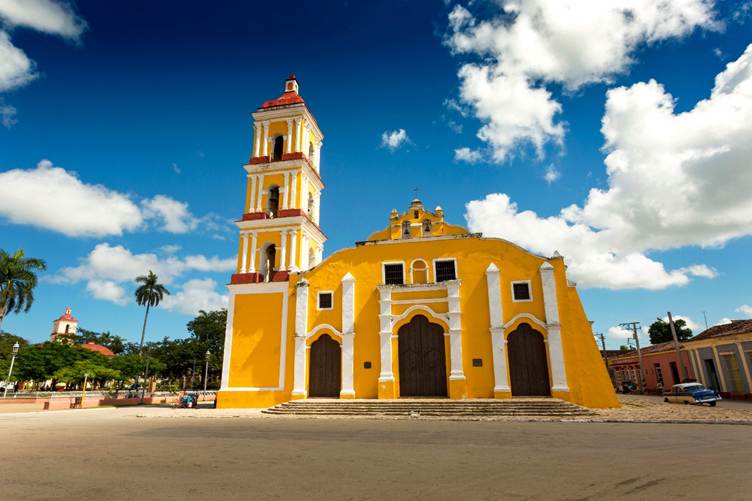
But what you may miss on your travels is a less-publicised tradition that takes place in the ornate St John the Baptist church on the 22nd of December in the build-up to the main affair.
A wild child burns up the aisle of the church with twigs and ferns poking out of his black outfit followed by seven boys clad in cowboy garb chasing him about the pews. It’s mayhem. The black-clad creature, a local child, plays El Güije, the Goblin, an ugly, hairy creature who was said to have large bulging eyes, pointed ears, and who lived in a deep pool of water.
El Güije, it was said, was a cattle and crop thief who terrorized the citizens of Remedios. The townsfolk needed to get rid of him.
An upstanding citizen of the town tried to discover the origins of the thieving creature. Turning the pages of the church archives, he read that El Güije was an escaped demon, one of 800,000 demons living in a local cave known as the Mouth of Hell. These demons had attempted to attack Remedios in the 17th century when tales of pirate attacks stunned local businessmen up and down Cuba’s coast.
Remedianos learnt that the only way to capture the hairy goblin was by calling up seven male virgins, all called Juan. The seven virgins named Juan eventually captured El Güije and dragged him into the church. Once the goblin glimpsed the crucifix, and heard a priest speaking, he fled, dived into a nearby pool of water and was never seen again.
The re-enactment of the capture of El Güije in St John the Baptist church always sees the goblin figure escape so that the locals can attempt to capture him once again the following year. A re-enactment is also staged on San Juan’s Day on June 24th each year.
Love Cuba is the UK’s leading Cuba holiday specialist and tour operator, offering tailor-made Cuba holidays, multi-centre Cuba holidays, Cuba tours and incredible experiences. As an ATOL-bonded company and multiple World Travel Awards and British Travel Awards winner, Love Cuba provides trusted, expert service when planning your dream trip to Cuba. For more information, contact our friendly Cuba travel specialists today on 0207 071 3636 or email enquiries@lovecuba.com